
📷 Image: Hindustan Times (via NewsData)
Politics
Supreme Court asks Rahul Gandhi, Mallikarjun Kharge to reply on plea over opposition march against CEC
✍️ Hindustan Times
🗓 03 Nov 2026, 06:52 PM
👁 2
The Supreme Court has issued a notice to opposition leaders Rahul Gandhi and Mallikarjun Kharge, seeking their responses to a petition challenging a protest march against Chief Election Commissioner Gyanesh Kumar.
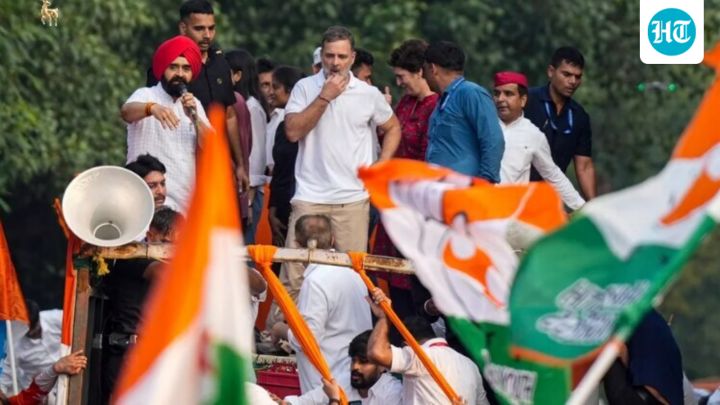
The apex court on Tuesday directed senior opposition figures Rahul Gandhi and Mallikarjun Kharge to file written replies to a petition that questions the legality of a protest march held on October 12 against Chief Election Commissioner Gyanesh Kumar. The petition, filed by a group of litigants, alleges that the demonstration violated the Model Code of Conduct and could influence the upcoming electoral process.
In its order, the Supreme Court set a deadline for the leaders to submit their responses, emphasizing the need to examine whether the march breached any statutory provisions. The court also indicated that it may hear oral arguments if the written submissions raise substantive issues.
Both Gandhi and Kharge, who lead the opposition bloc in Parliament, have not yet commented publicly on the court's directive. Their replies are expected to address the rationale behind the protest and its compliance with electoral norms.
Legal experts note that the case could set a precedent for how political rallies are regulated during election periods, especially when they target senior election officials. The outcome may influence future conduct of opposition parties ahead of the next general elections.
The Supreme Court’s intervention underscores the judiciary’s role in overseeing electoral integrity and ensuring that political actions remain within the bounds of law.