
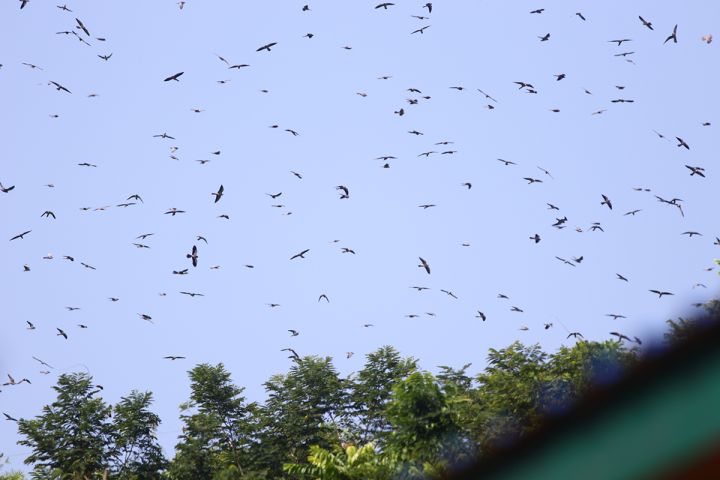
📷 Image: Wikimedia Commons / Dibyendu Ash
Science
Amur Falcons Touch Down in Nagaland on Their Epic Migration to Africa
✍️ India Today
🗓 03 Nov 2026, 10:39 PM
👁 1
Amur Falcons migrating from Siberia have arrived in Nagaland, marking a key stopover on their long journey to Africa.
A flock of Amur Falcons that breed in the forests of Siberia has been sighted in Nagaland, the northeastern state of India, as part of their annual migration to sub‑Saharan Africa. Birdwatchers and local wildlife officials reported the arrival early this week, confirming that the birds are using the region’s forested hills as a crucial resting and feeding stop.
The migration route of the Amur Falcon is one of the longest known for a small raptor, covering roughly 15,000 kilometres from breeding grounds in Russia and China to wintering sites in southern Africa. The birds typically spend a few days in Nagaland, taking advantage of abundant insects that emerge after the monsoon.
Conservation groups have highlighted Nagaland’s role in the global flyway, urging continued protection of the habitat that supports these vulnerable migrants. The sighting underscores the importance of cross‑border cooperation in safeguarding migratory pathways that span continents.
Authorities plan to monitor the flock’s progress through coordinated surveys with neighboring states and international partners, aiming to gather data that can inform future conservation strategies for the species.