
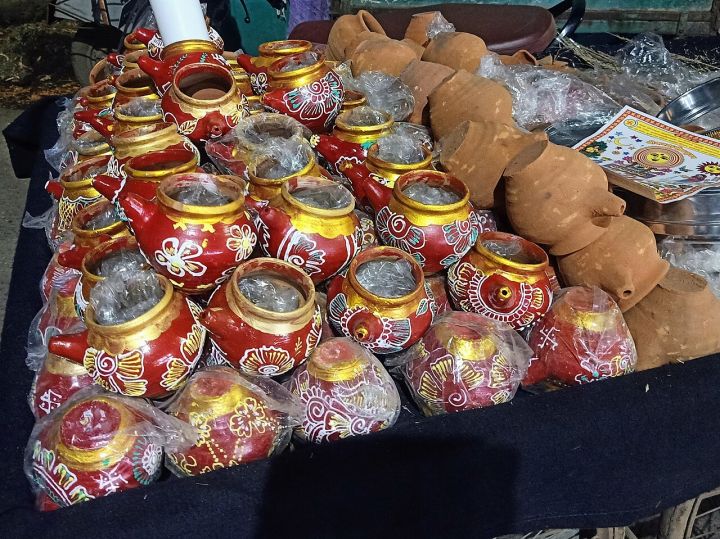
📷 Image: Wikimedia Commons / Suyash.dwivedi
Religion
Why Women View Moon Through Sieve on Karwa Chauth: The Ritual Significance
✍️ Aaj Tak
🗓 29 Oct 2026, 02:44 PM
👁 1
On Karwa Chauth, married women observe a fast for their husbands' well-being. A key ritual involves viewing the moon through a sieve rather than directly, a practice rooted in traditional beliefs about the moon's nature.
Karwa Chauth is a significant Hindu festival observed by married women in India, dedicated to the well-being and longevity of their husbands. The fast is considered incomplete without the ritual of Chandra Darshan, or moon sighting, which marks the end of the day-long fast.
While the moon is traditionally associated with longevity, happiness, and peace, there is a specific prohibition against looking at it directly with the naked eye during this festival. Instead, women are required to view the moon through a sieve (channi) or a similar perforated object before offering water (arghya).
This unique practice is rooted in cultural and astrological beliefs that dictate how celestial bodies should be approached during specific rituals. The use of the sieve acts as a medium, allowing the devotee to perform the darshan while adhering to the traditional guidelines that consider direct eye contact with the moon on this day inauspicious or spiritually delicate.
The ritual underscores the deep cultural significance attached to the moon in Hindu traditions, where it is revered as a powerful symbol. By following the specific method of viewing the moon through a sieve, women complete their observance of Karwa Chauth, seeking blessings for a harmonious and long-lasting marital life.