
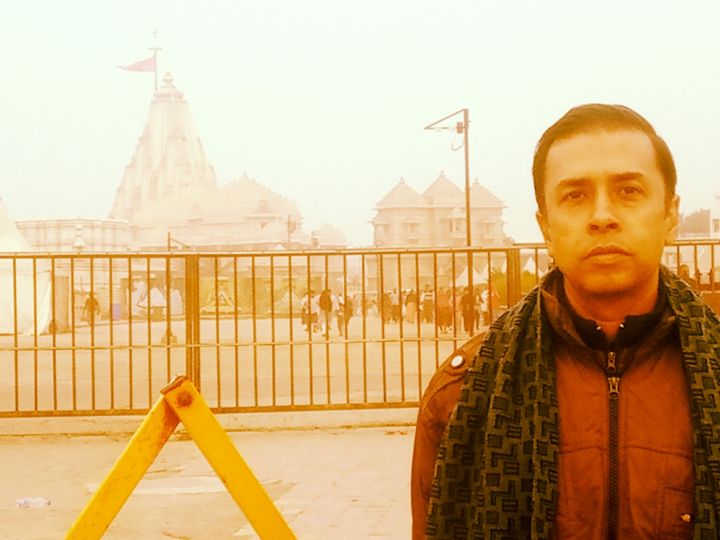
📷 Image: Wikimedia Commons / Sujay2026
Religion
Gujarat High Court lifts ban on non-vegetarian food near Somnath Temple
✍️ Bhaskar English
🗓 30 Oct 2026, 07:22 PM
👁 3
The Gujarat High Court has set aside the state government's order prohibiting non‑vegetarian food within the vicinity of the Somnath Temple, restoring the status quo before the ban.
In a recent judgment, the Gujarat High Court annulled the state government's restriction that barred the sale and consumption of non‑vegetarian food within a specified radius of the Somnath Temple. The court held that the order could not be sustained in view of constitutional principles governing freedom of trade and personal choice.
The ban, imposed earlier by the state administration, was intended to respect the religious sentiments associated with the ancient Shiva shrine and had been enforced across a zone extending several hundred metres from the temple complex. Vendors and eateries operating in the area were required to cease serving meat, fish and eggs.
With the court's decision, restaurants, street vendors and hotels near the temple can resume offering non‑vegetarian dishes without fear of legal action. Legal analysts note that the ruling underscores the need to balance cultural sensitivities with the rights guaranteed under the Indian Constitution.
The verdict is expected to impact both local businesses that rely on tourist footfall and pilgrims who visit the shrine, as the area returns to its pre‑restriction commercial landscape.